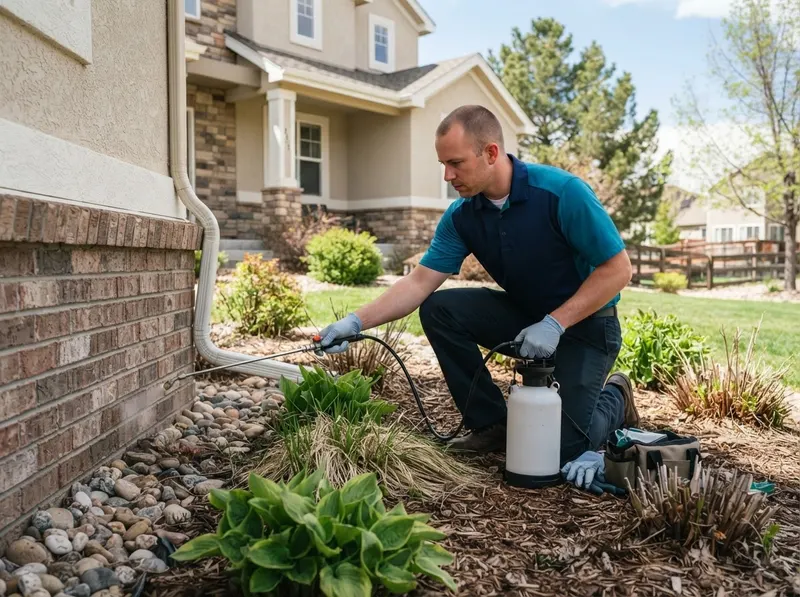
Quarterly Perimeter Pest Defense
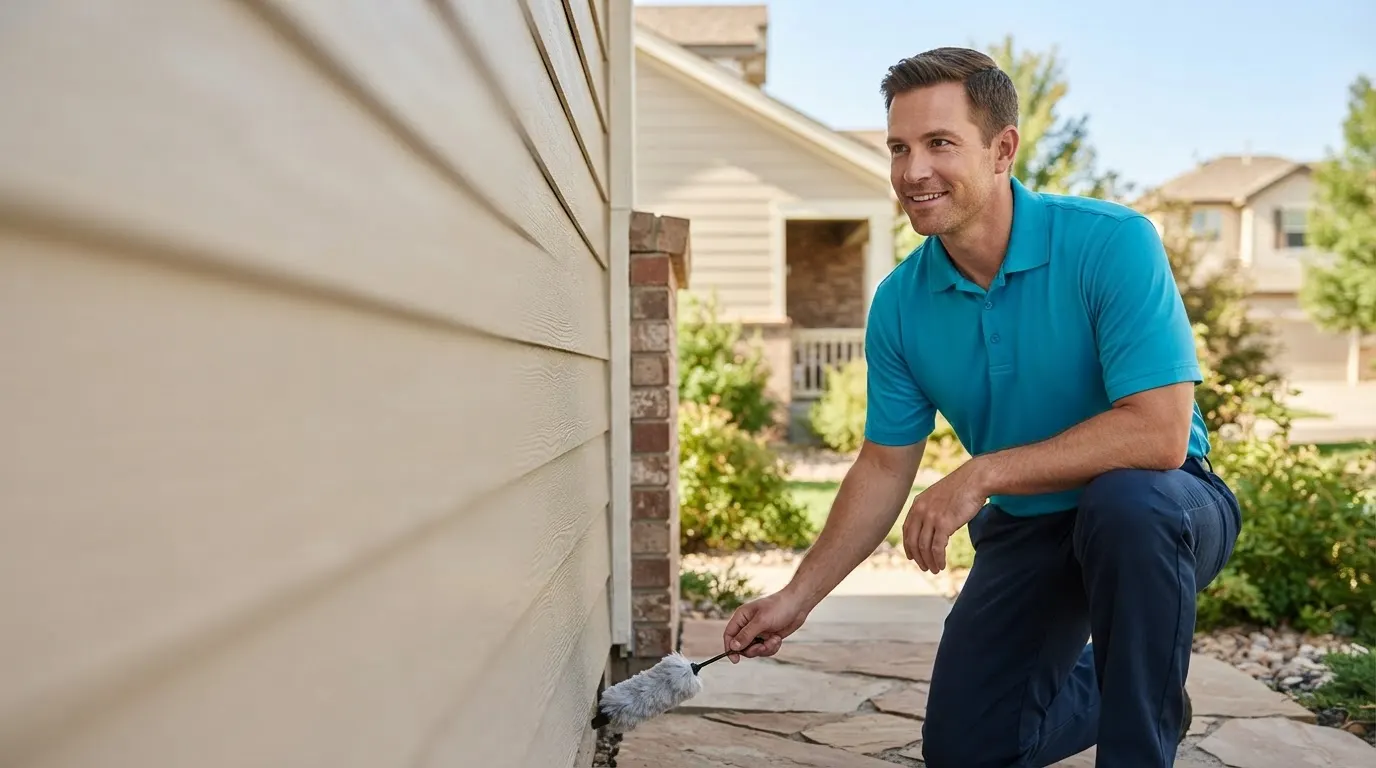
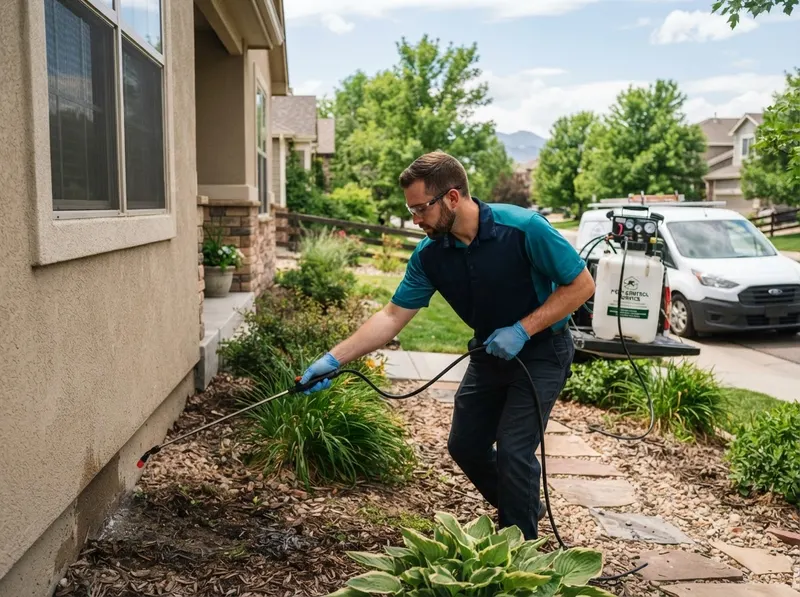
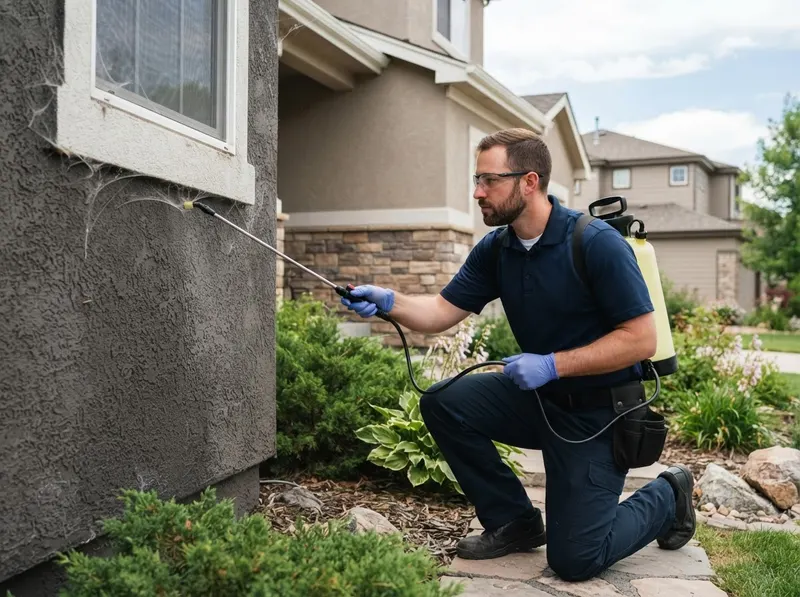
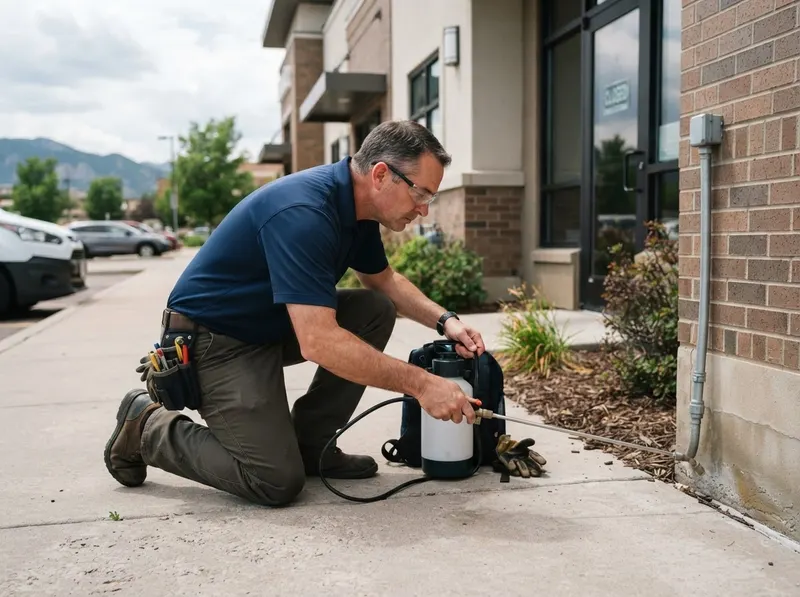
Quarterly perimeter pest defense delivers four scheduled annual treatments targeting seasonal arthropod migrations. The process applies a microencapsulated liquid barrier 3 feet up exterior masonry and 5 feet outward into perimeter mulch, preventing pavement ants, boxelder bugs, and ground spiders from penetrating door thresholds, basement egress windows, and foundation microfissures. Each seasonal visit incorporates proactive inspection of irrigation line penetrations, window well covers, and perimeter landscape beds. Technicians sweep spider webs and wasp starters from first-story and second-story eaves using 25-foot carbon fiber extension poles, ensuring chemical degradation from high Front Range ultraviolet light is continually counteracted by fresh protective residual applications.
Get a quote →Subterranean Ant Suppression
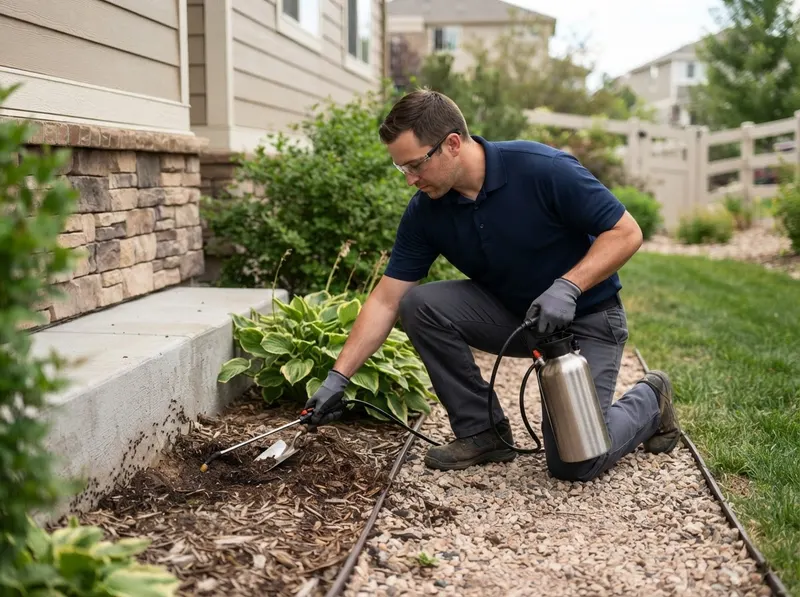
Subterranean ant suppression neutralizes colony networks nesting along flagstone walkways, concrete driveways, and expansive clay soil cracks. Non-repellent liquid formulations and targeted bait matrices allow foraging worker ants to transfer active ingredients back to subterranean queens, resolving persistent indoor trails in kitchens, bathrooms, and sub-slab heating ducts. Field technicians map localized trail corridors across exterior foundation masonry and concrete expansion joints, applying specialized slow-acting transfer agents that bypass worker defenses to eradicate reproductive brood chambers buried up to 3 feet below native turf grass. Follow-up monitoring checks structural baseboards and subfloor utility chases to verify complete colony collapse.
Get a quote →Exterior Stinging Insect Management
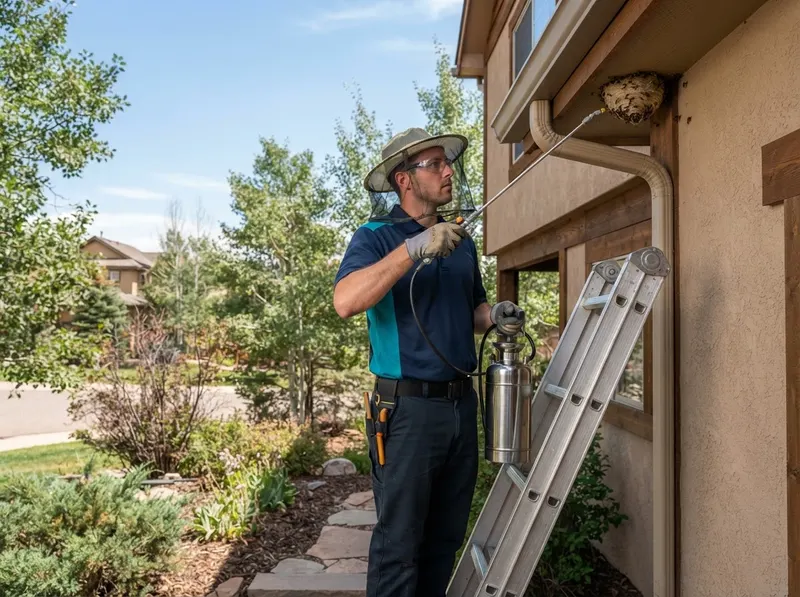
Exterior stinging insect management addresses bald-faced hornets, aerial paper wasps, and aggressive Western yellowjackets nesting along roof overhangs, soffits, and second-story gutters. Technicians execute direct aerosol knockdown, scrape exterior papery combs, and apply residual dusting products within attic soffit voids to prevent re-establishment during peak summer flight windows. In ground-nest scenarios common along railroad right-of-ways and dry decorative rock beds, crews utilize pressurized chemical injectors to treat underground burrow cavities directly. All treated nesting zones receive localized repellent barriers that stop returning foragers from rebuilding nests in identical architectural corners.
Get a quote →Rodent Trapping and Exclusion
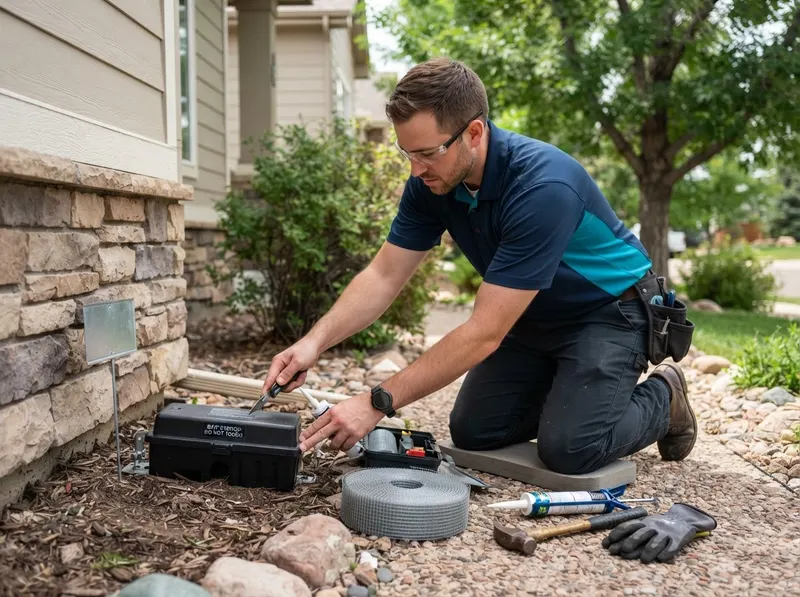
Rodent trapping and exclusion eliminates house mice and Norway rats seeking thermal shelter in crawlspaces, garages, and drop ceilings. Technicians seal penetrations greater than one-quarter inch using heavy-gauge copper mesh, elastomeric sealants, and galvanized hardware cloth, backed by mechanical interior trapping arrays checked systematically until populations are zeroed. Exclusion specialists conduct detailed inspections along garage door bottom seals, air conditioning line-set chases, roofline drip edges, and gas meter utility entries. Trapping stations are strategically positioned along perimeter floorboards and sill plates inside crawlspaces, utilizing species-specific food attractants to achieve rapid population knockdown without relying on indoor poison baits that cause rodent mortality within wall voids.
Get a quote →Attic and Crawlspace Decontamination
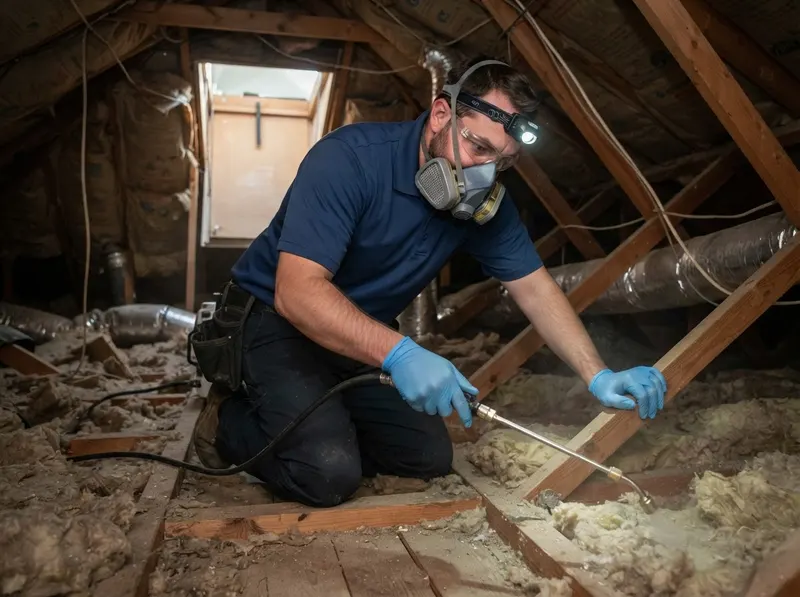
Attic and crawlspace decontamination removes biohazardous nesting debris, rodent droppings, and damaged insulation layers following active infestations. Crews HEPA-vacuum structural framing members, mist broad-spectrum virucides and sanitizers to neutralize airborne pathogens, and remediate compromised vapor barriers to eliminate lingering pheromone trails that attract future foragers. Structural wooden joists and subflooring receive direct enzymatic misting to break down urine salts and eliminate odor signatures that penetrate finished living areas. Technicians also replace soiled thermal batt insulation with fresh materials and verify that mechanical ventilation louvers and crawlspace access hatches feature pest-tight weather seals.
Get a quote →Nuisance Spider Reduction
Nuisance spider reduction eliminates active web sites and prey insect populations supporting black widows, wolf spiders, and yellow sac spiders. Treatment includes sweeping exterior eaves, under-deck frameworks, and window wells with telescoping cobweb brushes, followed by dusting unexcavated crawlspaces, utility conduits, and unfinished mechanical rooms with residual desiccants. Because spiders avoid grooming behavior that ingests pesticide residues, technicians focus treatments on insect prey suppression and structural harborage elimination. Specialized pyrethroid micro-emulsions are applied behind outdoor shutters, into exterior electrical junction boxes, and along unfinished basement rim joists where predatory arachnids construct egg sacs and wait for prey insects.
Get a quote →Commercial Pest Management Programs
Commercial pest management programs provide structural compliance, barcode-scanned bait station monitoring, and non-chemical pest interception for office corridors, commercial kitchens, and light industrial facilities. Written logbooks, threshold assessment reports, and electronic data logging fulfill regulatory documentation standards across hospitality, healthcare, and retail operations. Programs incorporate integrated pest management strategies designed to identify structural sanitation vulnerabilities, broken drain seals, exterior loading dock clearances, and dumpster pad sanitation issues. Treatments utilize low-odor, low-toxicity formulations applied exclusively during non-operational business hours to prevent interruption to office staff, warehouse employees, or dining patrons.
Get a quote →Spring Emergence Barrier Applications
Spring emergence barrier applications target overwintered insect queens, early-hatching clover mites, and perimeter invaders before population spikes accelerate in May. Technicians apply targeted granular perimeter applications around garden beds, turf interfaces, and downspout discharge locations to establish a protective soil boundary prior to warm-weather breeding. Granular formulations dissolve slowly with spring rainfall and automated lawn sprinkler cycles, penetrating two to three inches below topsoil and organic landscape mulch where dormant arthropods complete their spring pupation. This early treatment prevents migrating swarms from climbing exterior foundation brick, entering weep holes, or accumulating along south-facing window glass.
Get a quote →